The Downfall of Smartphone Giants: Huawei and the Systematic Collapse of Phone Brands
The smartphone industry represents one of the most volatile and ruthless markets in modern economic history. Unlike traditional consumer electronics, smartphones are not merely hardware products; they are ecosystem gateways that combine software platforms, semiconductor supply chains, cloud services, app economies, geopolitical interests, and long-term consumer trust.
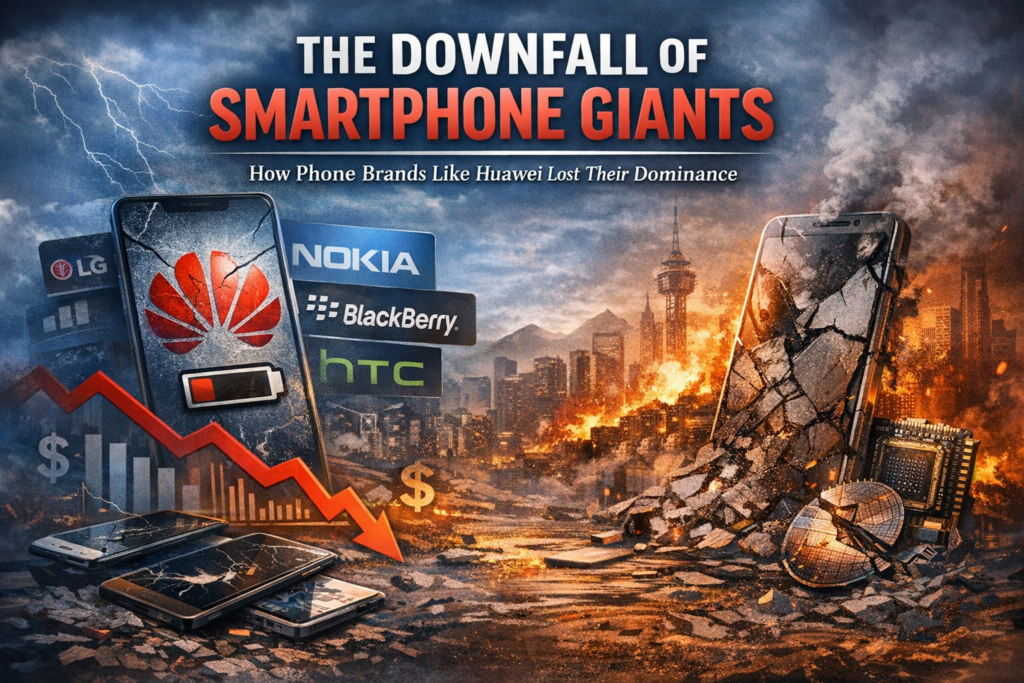
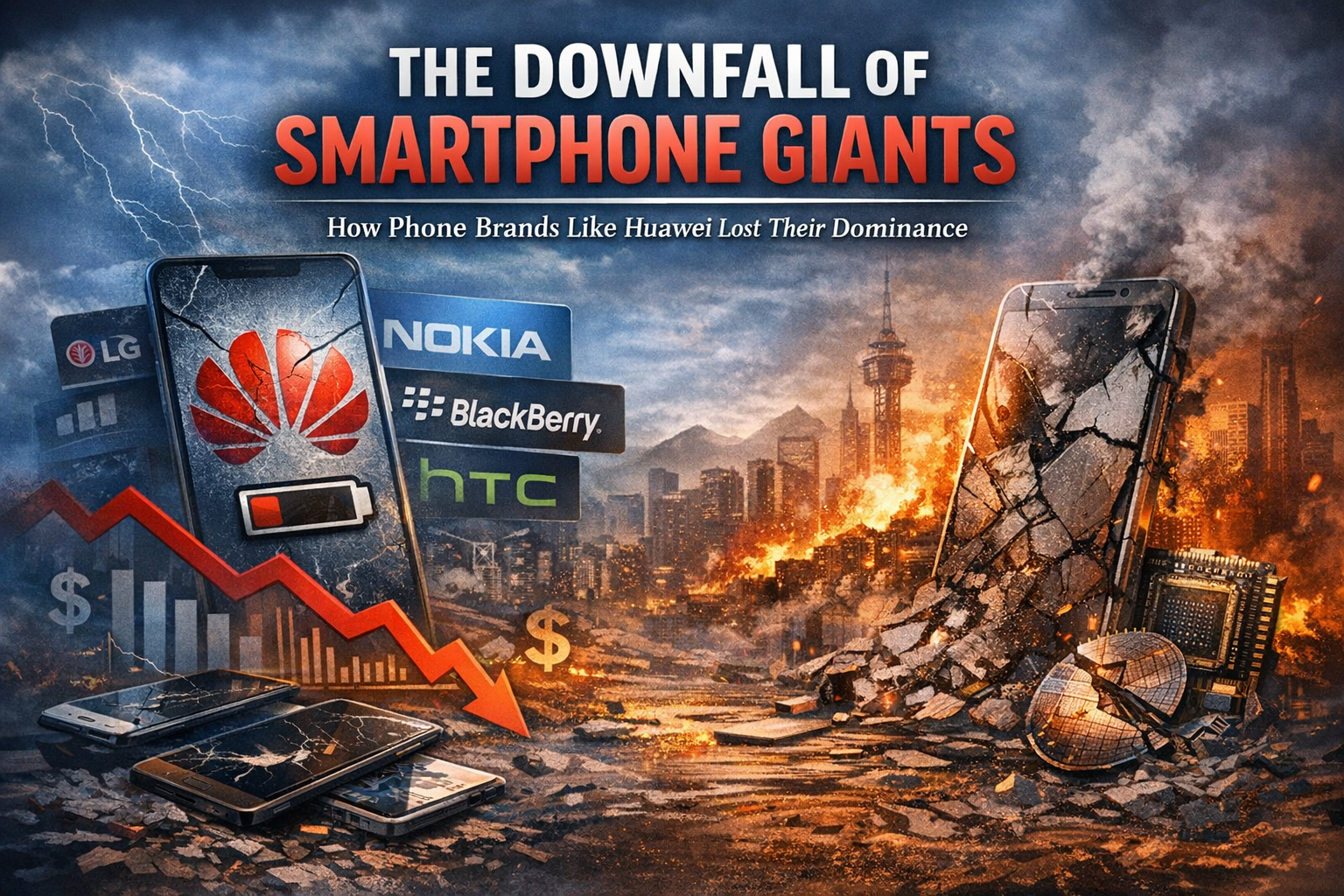
As a result, dominance in this industry is temporary. Over the last twenty years, numerous phone brands rose to unprecedented power—only to experience dramatic collapse. This article presents a **deep structural analysis** of the downfall of smartphone brands, with primary focus on :contentReference[oaicite:0]{index=0}, supported by comparative case studies of :contentReference[oaicite:1]{index=1}, :contentReference[oaicite:2]{index=2}, :contentReference[oaicite:3]{index=3}, :contentReference[oaicite:4]{index=4}, :contentReference[oaicite:5]{index=5}, and :contentReference[oaicite:6]{index=6}.
The Smartphone Industry as a Darwinian System
The smartphone market operates under extreme Darwinian pressure. Each product cycle compresses innovation timelines, forces capital-intensive R&D investments, and requires flawless execution across manufacturing, logistics, software updates, marketing, and after-sales support.
Unlike feature phones, smartphones require:
- Continuous operating system development
- Developer ecosystem support
- Security patch pipelines
- Cloud and AI integration
- Semiconductor innovation
- Geopolitical compliance
Failure in any of these layers introduces systemic risk that compounds over time.
Huawei: From Global Dominance to Strategic Containment
::contentReference[oaicite:7]{index=7}Huawei’s Rise: Engineering at Scale
Huawei’s ascent was neither accidental nor superficial. Unlike many consumer-focused brands, Huawei originated as a telecommunications infrastructure company, giving it unmatched expertise in networking, radio technologies, and large-scale system engineering.
By the late 2010s, Huawei had achieved:
- World-class camera technology through optical partnerships
- In-house Kirin chipsets optimized for power efficiency
- Vertical integration across hardware and firmware
- Aggressive global pricing strategy
- Strong brand recognition in Europe, Asia, and emerging markets
The Geopolitical Trigger
Huawei’s downfall was initiated not by market failure, but by geopolitical intervention. Trade restrictions imposed by the United States effectively severed Huawei from critical technologies.
Loss of Google Mobile Services
Android without Google Mobile Services is functionally incomplete for international consumers. The sudden removal of Gmail, Google Maps, YouTube, Play Store, and Google APIs instantly reduced Huawei’s value proposition.
Semiconductor Supply Chain Disruption
Advanced chip manufacturing requires access to extreme ultraviolet lithography, EDA software, and fabrication partners. Huawei’s Kirin roadmap collapsed when access to these technologies was blocked.
Consumer-Level Effects
- Loss of app compatibility
- Uncertainty over software longevity
- Reduced resale value
- Decreased consumer confidence
Market-Level Effects
- Reduced Android competition
- Price inflation in premium smartphones
- Accelerated ecosystem monopolization
Nokia: Organizational Inertia and Strategic Delay
::contentReference[oaicite:8]{index=8}Nokia’s collapse illustrates a different failure mode: organizational inertia. Despite market leadership, Nokia underestimated the importance of software ecosystems.
Critical Strategic Errors
- Late transition to touch-based UI
- Fragmented software strategy
- Dependence on Symbian architecture
- Misalignment with Windows Phone
Nokia retained hardware excellence but lost relevance.
BlackBerry: Security Without Scale
::contentReference[oaicite:9]{index=9}BlackBerry prioritized enterprise security over consumer experience. This strategy failed once smartphones became lifestyle devices.
Structural Weaknesses
- Weak app ecosystem
- Outdated UI paradigms
- Slow innovation cycles
HTC and LG: Innovation Without Sustainability
::contentReference[oaicite:10]{index=10}HTC and LG pioneered numerous innovations: metal unibody design, high-fidelity audio, modular experimentation, and camera advancements.
However, innovation alone did not translate into survival.
Shared Failure Factors
- Poor global branding
- Inconsistent pricing
- Slow software updates
- Low profit margins
Sony Mobile and Motorola: Brand Dilution
Sony Mobile failed to leverage its ecosystem advantage across gaming, imaging, and entertainment. Motorola lost momentum due to ownership instability and strategic resets.
Universal Causes Behind Phone Brand Downfall
- Ecosystem dependency
- Geopolitical exposure
- Software neglect
- Supply chain fragility
- Delayed strategic response
Long-Term Effects on the Global Smartphone Market
Market Consolidation
The industry increasingly revolves around a small number of dominant players, reducing consumer choice.
Innovation Bottlenecks
Fewer competitors reduce experimental risk-taking.
Geopolitical Fragmentation
Technology ecosystems are now increasingly regionalized.
Lessons for Future Smartphone Brands
- Control core technologies
- Invest in software ecosystems
- Plan for geopolitical risk
- Maintain strategic agility
- Build long-term consumer trust
Conclusion
The downfall of smartphone brands such as Huawei, Nokia, and BlackBerry demonstrates that technological leadership is fragile. In an ecosystem-driven, politically sensitive industry, survival depends on adaptability, integration, and foresight.