Realme GT 7 Pro Faces Overheating Concerns During Stress Tests, Benchmark Optimization Raises Questions
Realme GT 7 Pro Faces Overheating Concerns During Stress Tests, Benchmark Optimization Raises Questions Realme GT 7 Pro became one of the first smartphones powered by Qualcomm's Snapdragon 8 Elite, making its performance a major…

What is this news about?
Realme GT 7 Pro Faces Overheating Concerns During Stress Tests, Benchmark Optimization Raises Questions Realme GT 7 Pro became one of the first smartphones powered by Qualcomm's Snapdragon 8 Elite, making its performance a major…
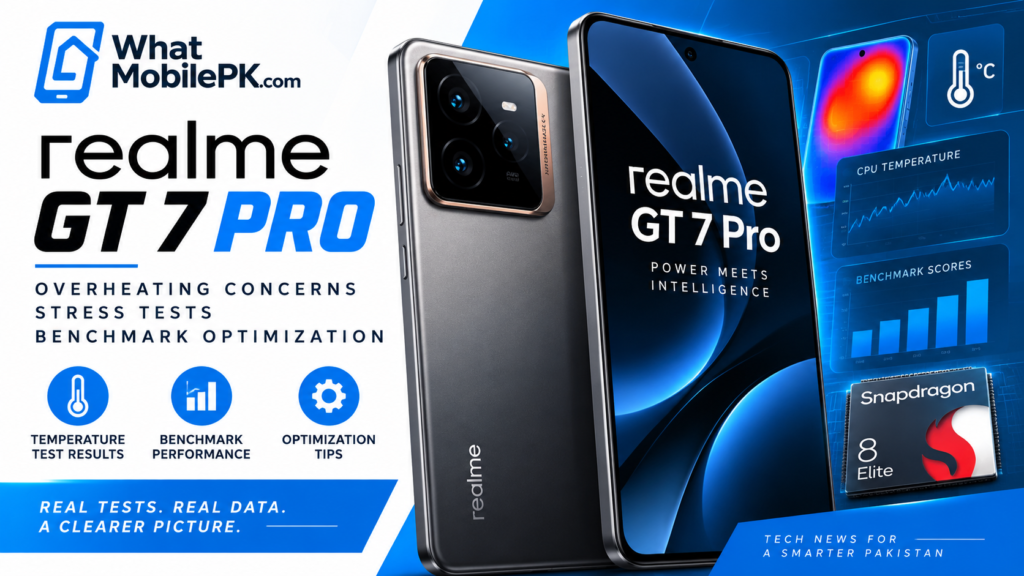
Realme GT 7 Pro Faces Overheating Concerns During Stress Tests, Benchmark Optimization Raises Questions
Realme GT 7 Pro became one of the first smartphones powered by Qualcomm’s Snapdragon 8 Elite, making its performance a major point of interest ahead of its launch. However, early testing brought attention to thermal behavior and unusual results in demanding benchmark applications.
The Snapdragon 8 Elite was designed to deliver a substantial performance increase over the previous generation, but pushing a flagship mobile processor at maximum load can generate significant heat. In early testing of the GT 7 Pro, some reviewers reported that intensive GPU stress tests were difficult for the phone to complete.
GPU stress tests exposed thermal problems
Testing with applications such as 3DMark Wild Life, Wild Life Extreme and Solar Bay produced particularly interesting results.
Android Authority reported that the GT 7 Pro repeatedly failed to complete several GPU stress tests. The phone became sufficiently hot that thermal warnings appeared, and some functionality was temporarily restricted as the device attempted to protect itself. One reported test reached approximately 46°C.
Digital Trends also experienced overheating during extended benchmark testing, with the phone stopping a Solar Bay stress test after becoming too hot. Realme said it was investigating the problem and attributed the behavior to a software compatibility issue.
These results were notable because Realme had equipped the GT 7 Pro with a large vapor-cooling system specifically designed to handle the demands of its flagship Snapdragon chipset.
Benchmark optimization raises questions
The situation became more interesting when reviewers tested the phone using versions of benchmark applications that were disguised so that the handset could not identify them as benchmark software.
The results suggested that the phone behaved differently depending on whether it recognized the application. Android Authority found substantially lower CPU benchmark results when using a spoofed version of Geekbench, raising concerns about application-specific performance optimization.
This does not necessarily mean that the GT 7 Pro was deliberately producing false results in every benchmark. Rather, the testing suggested that the phone could apply different performance behavior when it detected known benchmarking applications.
That distinction is important because synthetic benchmark results are intended to provide a consistent way of comparing hardware. If a device changes its performance profile specifically for a recognized benchmark, the resulting score may not accurately represent the performance behavior of ordinary applications.
Real-world gaming appeared less problematic
Despite the benchmark concerns, early reports did not indicate that the GT 7 Pro routinely overheated during normal smartphone use.
The most serious thermal behavior appeared during sustained synthetic stress tests designed to push the processor and GPU continuously. Android Authority noted that ordinary usage and gaming did not necessarily reproduce the same failures seen during the benchmark testing.
Independent testing from Smartprix later recorded strong benchmark performance from the GT 7 Pro, although extended stress testing still produced considerable thermal increases and some performance throttling.
This suggests that the issue should be viewed primarily as a sustained high-load and benchmark behavior concern, rather than automatically treating the phone as an overheating device during everyday use.
Realme investigated the issue
Realme acknowledged the reported 3DMark problem and indicated that the company was aware of the situation. Digital Trends also reported that Realme was working on a software update intended to address the software compatibility problem associated with the benchmark testing.
Software optimization can significantly affect smartphone thermal management and benchmark behavior. Consequently, early pre-launch testing should not necessarily be treated as representative of the final software experience.
What does this mean for Realme GT 7 Pro buyers?
The Realme GT 7 Pro remains a high-performance smartphone built around the Snapdragon 8 Elite platform. Its benchmark controversy does, however, highlight an important distinction between peak benchmark performance and sustained performance under continuous load.
For normal users, occasional benchmark results are less important than how consistently the phone performs during gaming, multitasking and other demanding workloads.
The early GT 7 Pro testing therefore provides two separate takeaways:
- The Snapdragon 8 Elite delivers extremely high performance potential.
- Sustained synthetic workloads can generate substantial heat.
- Benchmark applications may receive different performance treatment from ordinary apps.
- Real-world gaming results should be considered separately from synthetic stress-test behavior.
- Software updates can change thermal and performance behavior after launch.
Overall, the reports surrounding the Realme GT 7 Pro were significant because the phone was among the earliest Snapdragon 8 Elite devices to undergo public testing. They also demonstrated why sustained-performance testing is just as important as a single benchmark score when evaluating a flagship smartphone.
Realme GT 7 Pro: Key News Facts
| Detail | Information |
|---|---|
| Phone | Realme GT 7 Pro |
| Chipset | Qualcomm Snapdragon 8 Elite |
| Main concern | High temperatures during intensive stress tests |
| Tests involved | 3DMark GPU stress tests and Geekbench testing |
| Reported peak temperature | Around 46°C in one reported test |
| Benchmark concern | Different performance behavior when benchmark apps were disguised |
| Normal usage | Reported to be considerably less problematic than extreme stress testing |
| Company response | Realme acknowledged the 3DMark issue and investigated it |
| News date | November 4, 2024 |
The 46°C figure and benchmark-behavior observations come from contemporary testing rather than from WhatMobilePK’s own laboratory measurement, so your new article should preserve that distinction.