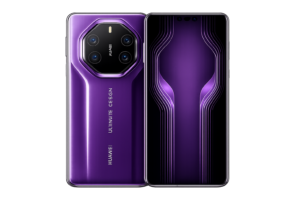
Huawei Mate 80 RS
Huawei
PKR 399,999
87/100 overall
Full specs & review
Head to head
Full specification and price comparison for Pakistan, updated 16 May 2026.
The Huawei Mate 80 RS and the Xiaomi 16 Ultra finish within three points of each other on our combined specification score, so neither is a clear winner. Xiaomi 16 Ultra leads on performance. The Huawei Mate 80 RS is the cheaper of the two at PKR 399,999 against PKR 409,999.
Huawei
PKR 399,999
87/100 overall
Full specs & review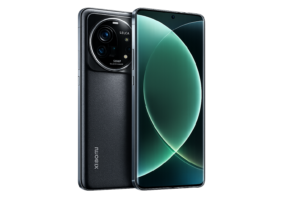
Xiaomi
PKR 409,999
90/100 overall
Full specs & reviewUp to 4 devices can share one comparison table.
Too close to call. These two finish within three points of each other, so the right answer depends on which category matters most to you.
you care most about battery & charging.
you care most about performance.
| Specification | Huawei Mate 80 RS | Xiaomi 16 Ultra |
|---|---|---|
| Price in Pakistan | ||
| Retail price | PKR 399,999 Cheaper | PKR 409,999 |
| Design & build | ||
| Release date | November 26, 2025 | Q1 2026 (China first, Pakistan later via import) |
| Dimensions | 164.4 x 79 x 8.25 mm | 162 × 76 × 9.3 mm |
| Weight | 249g | ~225–235 g Better |
| Water resistance | IP68 + IP69 dust & water resistant | IP68 dust and water resistant |
| Display | ||
| Screen size | 6.9 Inches Better | 6.8 inches |
| Resolution | 1320 x 2848 Pixels | 1440 × 3200 pixels (QHD+) Better |
| Panel type | Dual-layer LTPO OLED 120Hz Adaptive HDR Vivid 1 Billion Colors 1440Hz PWM Dimming BT.2020 Color Gamut | LTPO AMOLED 1–120Hz adaptive HDR10+, Dolby Vision |
| Protection | Huawei Kunlun Glass 3 | Xiaomi Shield Glass |
| Performance | ||
| Chipset | Kirin 9030 Pro (5nm) | Qualcomm Snapdragon 8 Gen 4 / Elite (3nm) |
| CPU | Octa-Core Processor 1x Cortex-X Core 4x Performance Cores 3x Efficiency Cores | Octa-core |
| GPU | Maleoon 935 GPU | Adreno (next-gen) |
| Operating system | HarmonyOS 6.0 | Android 16 (HyperOS 3) |
| Memory & storage | ||
| RAM | 20GB Better | 12GB / 16GB |
| Internal storage | 512GB 1TB | 256GB / 512GB / 1TB |
| Card slot | No | No |
| Camera | ||
| Main camera | 50MP Main Camera Variable Aperture f/1.4–f/4.0 OIS 40MP Ultra-Wide Camera 50MP Periscope Telephoto 4x Optical Zoom 50MP Periscope Telephoto 6.2x Optical Zoom | 50 MP, 1-inch sensor, OIS (Sony LYT/L-series) 50 MP, OIS, 5× optical zoom50 MP |
| Selfie camera | 13MP Ultra-Wide Selfie Camera 3D Depth Sensor | 32 MP Better |
| Video recording | 4K Video Recording 1080p Video Recording HDR Video Ultra Stable Video Slow Motion Video up to 960fps | 8K@30fps 4K@30/60/120fps Dolby Vision HDR |
| Battery & charging | ||
| Battery capacity | Silicon-Carbon Li-Ion (Non-removable) 6000mAh Better | Si-Carbon ~5400 mAh (expected) |
| Wired charging | 100W Wired Fast Charging 80W Wireless Fast Charging 18W Reverse Wired Charging 20W Reverse Wireless Charging Better | 90W wired, 50W wireless, reverse wireless |
| Connectivity & extras | ||
| SIM | Dual Nano-SIM + eSIM | Dual Nano-SIM |
| Wi-Fi | Wi-Fi 802.11 a/b/g/n/ac/ax/be, Dual-Band, Wi-Fi 7 | Wi-Fi 7 |
| Bluetooth | v5.4 | 5.4 |
| NFC | Yes | Yes |
| Sensors | Side-mounted Fingerprint Sensor Accelerometer Gyroscope Proximity Sensor Compass Barometer Ambient Light Sensor Hall Sensor Color Spectrum Sensor 3D Face Recognition Sensor | Under-display fingerprint (ultrasonic) Accelerometer Gyro Proximity Compass Barometer |
| USB | USB Type-C 3.1 OTG, DisplayPort | USB-C 3.2 / USB 4 (expected) |
“Better” marks the higher (or, for price and weight, the lower) figure. It is a specification difference, not a judgement about real-world experience.
Huawei Mate 80 RS and Xiaomi 16 Ultra finish within a few points of each other, so neither is a clear winner on paper. Pick the one that leads in the category you care about most.
Huawei Mate 80 RS is listed at PKR 399,999 and Xiaomi 16 Ultra at PKR 409,999. That makes Huawei Mate 80 RS cheaper by PKR 10,000. Retail prices move often, so treat these as indicative.
Huawei Mate 80 RS leads on battery. Huawei Mate 80 RS carries a 6000 mAh cell and Xiaomi 16 Ultra a 5400 mAh cell, with 100W and 90W wired charging respectively.
Xiaomi 16 Ultra is the stronger gaming phone here. Huawei Mate 80 RS runs the Kirin 9030 Pro (5nm) while Xiaomi 16 Ultra runs the Qualcomm Snapdragon 8 Gen 4 / Elite (3nm).
Scores are calculated from the published hardware specification of each device using the same formula for every phone on WhatMobilePK — they are not paid placements and they are not laboratory test results. Prices are indicative Pakistani retail prices and change frequently.