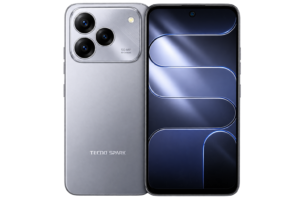
Tecno Spark 50 5G
Tecno
PKR 64,999
77/100 overall
Full specs & review
Head to head
Full specification and price comparison for Pakistan, updated 9 Aug 2026.
The Xiaomi Poco X8 Power is the stronger phone of the two, scoring 84 against 77 on our combined specification score. It leads on camera, battery & charging and display. The Tecno Spark 50 5G still wins on value for money, so it remains the better choice if that is your priority. The Tecno Spark 50 5G is the cheaper of the two at PKR 64,999 against PKR 99,999.
Tecno
PKR 64,999
77/100 overall
Full specs & review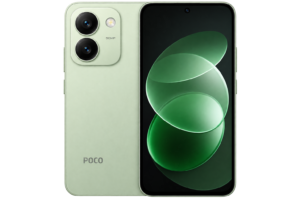
Poco
PKR 99,999
84/100 overall
Full specs & reviewUp to 4 devices can share one comparison table.
Xiaomi Poco X8 Power takes it by 7.2 points on our weighted spec score.
you care most about value for money.
you care most about camera, battery & charging, display and memory & storage.
| Specification | Tecno Spark 50 5G | Xiaomi Poco X8 Power |
|---|---|---|
| Price in Pakistan | ||
| Retail price | PKR 64,999 Cheaper | PKR 99,999 |
| Design & build | ||
| Release date | April 2, 2026 (Global Announcement) | September 4, 2026 (expected) |
| Dimensions | 167.9 × 79.3 × 8.18 mm | 163.4 x 78.3 x 8.6 mm |
| Weight | Around 205–210 g (varies by market) Better | 229.5 g |
| Water resistance | IP64 Dust and Water Resistance | IP68/IP69K dust and water resistance. |
| Display | ||
| Screen size | 6.78 inches | 6.83-inch Better |
| Resolution | 720 × 1600 pixels (HD+) | 1280 × 2772 pixels Better |
| Panel type | IPS LCD Up to 700 nits (HBM) 120Hz Adaptive Refresh Rate Eye Care Mode Reading Mode Dark Mode | AMOLED, 120Hz HDR10+, 3500 nits peak brightness |
| Protection | Standard scratch-resistant glass (official type not disclosed) | Corning Gorilla Glass Victus 2. |
| Performance | ||
| Chipset | MediaTek Dimensity 6400 (6nm) | Qualcomm Snapdragon 6 Gen 5 (4 nm) |
| CPU | Octa-core 2 × Cortex-A76 Performance Cores 6 × Cortex-A55 Efficiency Cores | Octa-core (4× 2.6 GHz Cortex-A78 + 4× 2.0 GHz Cortex-A55) |
| GPU | Mali-G57 MC2 | Adreno 812 |
| Operating system | Android 16 HiOS 16 | Android 16, HyperOS 3. |
| Memory & storage | ||
| RAM | 4GB / 6GB / 8GB LPDDR4X Supports Memory Fusion (Virtual RAM) up to 16GB (market dependent) Better | 8GB / 12GB |
| Internal storage | 128GB / 256GB UFS 2.2 | 128GB / 256GB / 512GB Better |
| Card slot | microSDXC (dedicated microSD card slot) | No |
| Camera | ||
| Main camera | 50 MP f/1.8 PDAF AI Lens LED Flash HDR Panorama AI Photography FlashSnap Night Mode Portrait Mode Beauty Mode AI Scene Detection | 50 MP (Wide) + 8 MP (Ultrawide), OIS, PDAF, LED Flash, HDR, Panorama |
| Selfie camera | 8 MP Single LED Flash Beauty Mode AI Portrait HDR | 32 MP, f/2.2, Wide, HDR, Panorama Better |
| Video recording | 1080p@30fps 720p@30fps | 4K@30fps, 1080p@30/60fps, gyro-EIS |
| Battery & charging | ||
| Battery capacity | 6500 mAh (some regional variants list 6150 mAh rated capacity) | Li-Po (Non-removable) 10000 mAh Better |
| Wired charging | 45W Super Charging | 100W wired fast charging, 27W reverse wired charging. Better |
| Connectivity & extras | ||
| SIM | Dual Nano-SIM (Dual Standby) | Nano-SIM + Nano-SIM, Dual SIM |
| Wi-Fi | Wi-Fi 802.11 a/b/g/n/ac, Dual-Band, Wi-Fi Direct, Hotspot | Wi-Fi 802.11 a/b/g/n/ac/ax, dual-band, Wi-Fi Direct |
| Bluetooth | v5.4 | Bluetooth 6.0 |
| NFC | Yes | Yes |
| Sensors | Side-mounted Fingerprint Scanner Accelerometer Ambient Light Sensor Proximity Sensor E-Compass Virtual Gyroscope | Fingerprint (under-display, optical), accelerometer, gyroscope, proximity, compass. |
| USB | USB Type-C 2.0, OTG | USB Type-C 2.0, OTG |
“Better” marks the higher (or, for price and weight, the lower) figure. It is a specification difference, not a judgement about real-world experience.
Xiaomi Poco X8 Power comes out ahead on our combined spec score, leading by 7.2 points. It wins on camera, battery & charging, display and memory & storage. Tecno Spark 50 5G can still be the better buy if your priorities sit elsewhere or if you find it at a lower street price.
Tecno Spark 50 5G is listed at PKR 64,999 and Xiaomi Poco X8 Power at PKR 99,999. That makes Tecno Spark 50 5G cheaper by PKR 35,000. Retail prices move often, so treat these as indicative.
Xiaomi Poco X8 Power scores higher in our camera assessment. Both use comparable main sensors, so day to day results come down to processing.
Xiaomi Poco X8 Power leads on battery. Tecno Spark 50 5G carries a 6500 mAh cell and Xiaomi Poco X8 Power a 10000 mAh cell, with 45W and 100W wired charging respectively.
Scores are calculated from the published hardware specification of each device using the same formula for every phone on WhatMobilePK — they are not paid placements and they are not laboratory test results. Prices are indicative Pakistani retail prices and change frequently.