
Oppo Reno 16
Oppo
PKR 199,999
79/100 overall
Full specs & review
Head to head
Full specification and price comparison for Pakistan, updated 6 Sep 2026.
The Xiaomi Poco F9 Ultra is the stronger phone of the two, scoring 90 against 79 on our combined specification score. It leads on performance, camera and battery & charging. The Oppo Reno 16 still wins on value for money, so it remains the better choice if that is your priority. The Oppo Reno 16 is the cheaper of the two at PKR 199,999 against PKR 289,999.
Oppo
PKR 199,999
79/100 overall
Full specs & review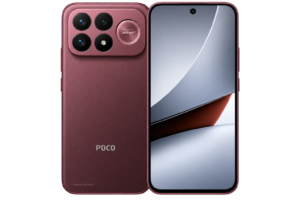
Poco
PKR 289,999
90/100 overall
Full specs & reviewUp to 4 devices can share one comparison table.
Xiaomi Poco F9 Ultra takes it by 10.4 points on our weighted spec score.
you care most about value for money.
you care most about performance, camera, battery & charging and memory & storage.
| Specification | Oppo Reno 16 | Xiaomi Poco F9 Ultra |
|---|---|---|
| Price in Pakistan | ||
| Retail price | PKR 199,999 Cheaper | PKR 289,999 |
| Design & build | ||
| Release date | July 2, 2026 | September 2026 |
| Dimensions | 151.2 x 72.4 x 8.2/8.4 mm | 163.49 × 77.94 × 8.74 mm |
| Weight | 182 g / 193 g Better | 235 g |
| Water resistance | IP66 / IP68 / IP69 / IP69K | IP68 |
| Display | ||
| Screen size | 6.32-inch | 6.9-inch Better |
| Resolution | 2640 x 1216 Pixels Better | 1200 × 2608 pixels |
| Panel type | AMOLED 120Hz Refresh Rate, 460 PPI, 1.07 Billion Colors, 10-bit Color Depth, 1800 nits HBM Brightness, 100% DCI-P3, HDR10+ | AMOLED 185Hz refresh rate, 12-bit color, HDR10+, Dolby Vision, up to 10,000 nits peak brightness |
| Protection | Crystal Guard+ AMOLED Protection | Gorilla Glass 7i |
| Performance | ||
| Chipset | Qualcomm Snapdragon 7 Gen 4 (4nm) | Qualcomm Snapdragon 8 Elite Gen 5 (3nm) |
| CPU | Octa-Core, 1×2.8GHz + 4×2.4GHz + 3×1.8GHz | Octa-core, up to 4.6 GHz |
| GPU | Adreno 722 | Adreno GPU, VisionBoost D8 |
| Operating system | Android 16, ColorOS 16.0 | Android 16, HyperOS 3. |
| Memory & storage | ||
| RAM | 12GB LPDDR5X | 12GB/16GB LPDDR5X Better |
| Internal storage | 256GB UFS 3.1 | 256GB/512GB/1TB UFS 4.1, Better |
| Card slot | No | No |
| Camera | ||
| Main camera | 50MP, f/1.8, 2-axis OIS, PDAF + 50MP, f/2.8, 3.5x Optical Zoom, 2-axis OIS, PDAF + 50MP, f/2.0, 116° Ultrawide, Autofocus | 200MP, f/1.68, OIS + 50MP periscope telephoto, f/3.0, OIS, 5x optical zoom + 50MP ultrawide, f/2.4 Better |
| Selfie camera | 50MP, f/2.0, 100° FOV, 5P Lens, Autofocus, HDR, Portrait, Night Mode, Panorama, Retouch, Up to 2x Digital Zoom Better | 32MP, f/2.2, HDR, Portrait Mode |
| Video recording | 4K@60/30fps, 1080p@60/30fps, 720p@30fps, EIS/OIS, 1080p Slow Motion@120fps, 720p Slow Motion@240/120fps, HDR Video, Time-Lapse, Dual-View Video, Up to 3.5x Optical Zoom & 18x Digital Zoom | 8K@30fps, 4K@30/60fps, 1080p@30/60fps, 720p@30fps, Slow-motion up to 1920fps |
| Battery & charging | ||
| Battery capacity | Si/C Li-Ion, Non-Removable 6490mAh | Silicon-carbon battery (non-removable) 8050 mAh Better |
| Wired charging | 80W SUPERVOOC Fast Charging, 55W PPS, 13.5W USB PD & 13.5W QC Support | 100W wired, 50W wireless, 27W reverse wired, 22.5W reverse wireless Charging Better |
| Connectivity & extras | ||
| SIM | Dual Nano-SIM, Dual Standby | Dual Nano-SIM / eSIM |
| Wi-Fi | Wi-Fi 6 (802.11 a/b/g/n/ac/ax), Dual-Band, 5GHz 160MHz, Wi-Fi Display, Wi-Fi Direct, 2x2 MIMO | Wi-Fi 7 (802.11 a/b/g/n/ac/ax/be) |
| Bluetooth | 5.4, A2DP, LE, SBC, AAC, aptX, aptX HD, aptX Adaptive, LDAC, LHDC 5.0 | 6.0, Dual Bluetooth |
| NFC | Yes | Yes |
| Sensors | Accelerometer, Gyroscope, Proximity Sensor, Ambient Light Sensor, Colour Temperature Sensor, E-Compass, In-display Optical Fingerprint Sensor, Infrared Remote Sensor | Ultrasonic Fingerprint Sensor, Proximity Sensor, Ambient Light Sensor, Accelerometer, Electronic Compass, Gyroscope, IR Blaster, Flicker Sensor, X-Axis Linear Vibration Motor, Color Temperature Sensor |
| USB | USB Type-C 2.0, OTG | USB Type-C 3.2 Gen 1 |
“Better” marks the higher (or, for price and weight, the lower) figure. It is a specification difference, not a judgement about real-world experience.
Xiaomi Poco F9 Ultra comes out ahead on our combined spec score, leading by 10.4 points. It wins on performance, camera, battery & charging and memory & storage. Oppo Reno 16 can still be the better buy if your priorities sit elsewhere or if you find it at a lower street price.
Oppo Reno 16 is listed at PKR 199,999 and Xiaomi Poco F9 Ultra at PKR 289,999. That makes Oppo Reno 16 cheaper by PKR 90,000. Retail prices move often, so treat these as indicative.
Xiaomi Poco F9 Ultra scores higher in our camera assessment. Oppo Reno 16 uses a 50 MP main sensor against 200 MP on Xiaomi Poco F9 Ultra, though sensor size and processing matter more than resolution alone.
Xiaomi Poco F9 Ultra leads on battery. Oppo Reno 16 carries a 6490 mAh cell and Xiaomi Poco F9 Ultra a 8050 mAh cell, with 80W and 100W wired charging respectively.
Xiaomi Poco F9 Ultra is the stronger gaming phone here. Oppo Reno 16 runs the Qualcomm Snapdragon 7 Gen 4 (4nm) while Xiaomi Poco F9 Ultra runs the Qualcomm Snapdragon 8 Elite Gen 5 (3nm).
Scores are calculated from the published hardware specification of each device using the same formula for every phone on WhatMobilePK — they are not paid placements and they are not laboratory test results. Prices are indicative Pakistani retail prices and change frequently.