Xiaomi Redmi Note 15 Pro Plus vs Samsung Galaxy A56 – The Ultimate Mid-Range Battle
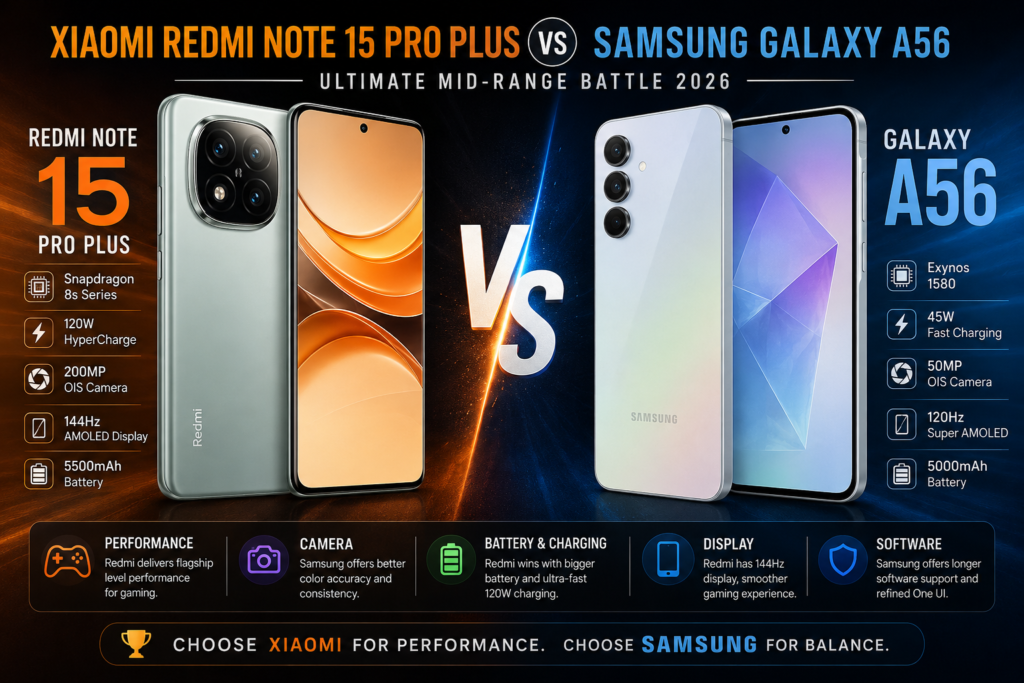
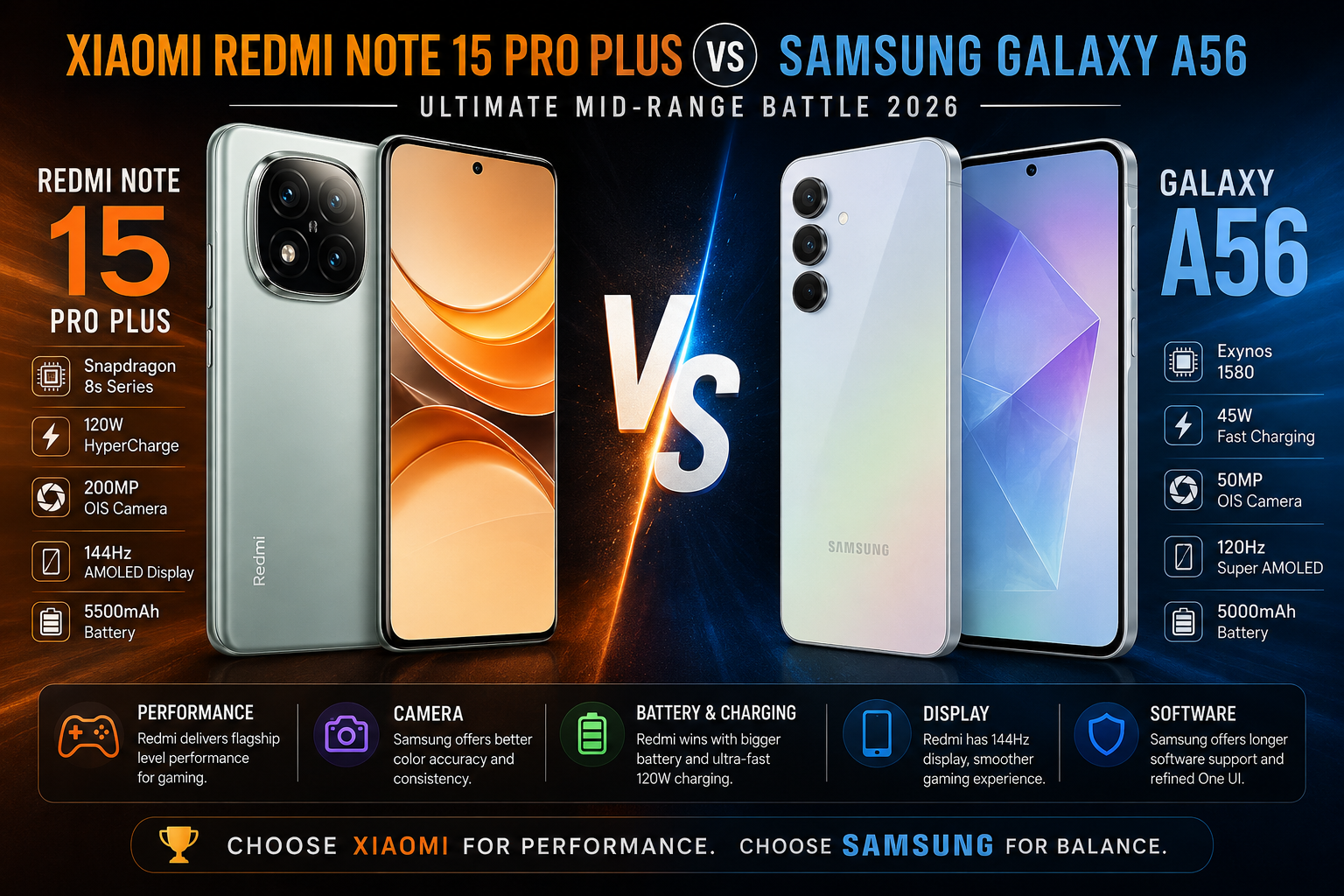
The mid-range smartphone market has become more competitive than ever, and two devices currently attracting massive attention are the Xiaomi Redmi Note 15 Pro Plus and the Samsung Galaxy A56. Both smartphones offer premium-level features, powerful cameras, smooth AMOLED displays, fast processors, and modern designs at prices that are significantly lower than flagship devices. However, despite targeting a similar audience, both smartphones focus on very different strengths.
Xiaomi continues pushing aggressive hardware specifications, delivering flagship-level performance, ultra-fast charging, and high-resolution camera systems. Samsung, on the other hand, focuses more on refined software optimization, long-term software updates, camera consistency, and a polished ecosystem experience. This creates an interesting battle between raw hardware power and overall user experience.
In this complete comparison guide, we will compare design quality, display performance, gaming capabilities, camera systems, battery life, charging speeds, software experience, durability, audio quality, long-term value, and overall performance to help you decide which smartphone deserves your money in 2026.
Quick Overview of Both Smartphones
Xiaomi Redmi Note 15 Pro Plus
Performance & Charging Champion- Display: 6.78-inch AMOLED 144Hz
- Processor: Snapdragon 8s Series Chipset
- RAM: 12GB / 16GB
- Storage: 256GB / 512GB
- Main Camera: 200MP OIS Triple Camera
- Battery: 5500mAh
- Charging: 120W HyperCharge
- Operating System: HyperOS Android 15
- Build: Glass + Aluminum Frame
- Protection: Gorilla Glass
- IP Rating: IP68
Samsung Galaxy A56
Balanced All-Round Smartphone- Display: 6.7-inch Super AMOLED 120Hz
- Processor: Exynos 1580
- RAM: 8GB / 12GB
- Storage: 128GB / 256GB
- Main Camera: 50MP OIS Triple Camera
- Battery: 5000mAh
- Charging: 45W Fast Charging
- Operating System: One UI Android 15
- Build: Premium Glass Finish
- Protection: Gorilla Glass Victus
- IP Rating: IP67
Design & Build Quality Comparison
Design has become one of the most important aspects of modern smartphones. Buyers no longer want devices that only perform well; they also expect premium aesthetics and strong durability. Xiaomi and Samsung both understand this trend, and both companies have significantly improved their mid-range smartphone designs over the last few years.
Xiaomi Redmi Note 15 Pro Plus Design
The Redmi Note 15 Pro Plus features an aggressive and modern flagship-inspired design. Xiaomi uses curved edges, a slim profile, premium materials, and a large camera module that gives the phone a powerful appearance. The device feels premium in hand and resembles many flagship devices from the ultra-premium market.
The rear camera setup is visually bold, while the aluminum frame increases structural strength. Xiaomi also improved weight distribution, making the phone feel balanced despite having a massive battery inside.
Samsung Galaxy A56 Design
Samsung focuses on simplicity and elegance. The Galaxy A56 delivers a cleaner and more refined appearance with Samsung’s signature minimalist design language. The individual camera rings on the rear panel create a premium flagship look inspired by Samsung’s higher-end Galaxy S series.
The device feels lighter and more polished during daily usage. Samsung’s build quality consistency remains one of its strongest advantages, especially for users who prefer understated premium aesthetics instead of aggressive gaming-inspired styling.
Design Verdict
If you prefer bold flagship-inspired styling and futuristic design, Xiaomi Redmi Note 15 Pro Plus feels more exciting. However, if you want a cleaner, elegant, and professional-looking device, Samsung Galaxy A56 delivers a more mature premium experience.
Display Quality & Multimedia Experience
Both smartphones feature AMOLED technology, which means users can expect deep blacks, excellent contrast, vibrant colors, and smooth animations. However, the display experience differs in several important ways.
Xiaomi Redmi Note 15 Pro Plus Display
The Redmi Note 15 Pro Plus includes a large 6.78-inch AMOLED panel with a 144Hz refresh rate. This extremely high refresh rate provides ultra-smooth scrolling, fluid gaming animations, and excellent responsiveness. Xiaomi also increases brightness levels for improved outdoor visibility.
Watching movies, gaming, and browsing social media feels incredibly smooth on this display. HDR support and enhanced color calibration also improve streaming quality on supported platforms.
Samsung Galaxy A56 Display
Samsung has always been one of the strongest smartphone display manufacturers in the world, and the Galaxy A56 benefits greatly from Samsung’s expertise. The phone features a 120Hz Super AMOLED panel with exceptional color accuracy and brightness consistency.
Although the refresh rate is lower than Xiaomi’s 144Hz panel, Samsung’s optimization makes animations feel extremely smooth. Color reproduction is more natural, making the display ideal for content consumption, photography editing, and daily multimedia use.
| Feature | Redmi Note 15 Pro Plus | Samsung Galaxy A56 | Winner |
|---|---|---|---|
| Refresh Rate | 144Hz | 120Hz | Redmi |
| Brightness | Excellent | Excellent | Tie |
| Color Accuracy | Very Good | Excellent | Samsung |
| Gaming Smoothness | Outstanding | Very Good | Redmi |
| Media Experience | Immersive | Balanced & Natural | Tie |
Gaming Performance & Hardware Power
Performance is where Xiaomi aggressively dominates most mid-range competitors. The Redmi Note 15 Pro Plus is designed for users who demand maximum performance, especially mobile gamers and heavy multitaskers.
The powerful Snapdragon chipset delivers flagship-grade gaming performance with excellent thermal management and GPU power. Games like PUBG Mobile, Call of Duty Mobile, Fortnite, and Genshin Impact run smoothly at high settings with stable frame rates.
Samsung Galaxy A56 delivers reliable everyday performance, but it targets balanced users rather than hardcore gamers. The Exynos chipset handles multitasking, productivity, streaming, and social media extremely well, but under extreme gaming workloads Xiaomi still maintains the lead.
Samsung’s optimization, however, gives the Galaxy A56 excellent stability. Apps launch quickly, multitasking remains smooth, and One UI animations feel polished and refined during daily usage.
Camera Comparison – Which Phone Takes Better Photos?
Camera quality is often the biggest deciding factor for smartphone buyers. Xiaomi and Samsung take very different approaches to smartphone photography.
Xiaomi Redmi Note 15 Pro Plus Camera
Xiaomi focuses heavily on high-resolution photography. The 200MP sensor captures impressive detail, especially in daylight conditions. Landscape photography looks sharp and vibrant, while AI optimization improves dynamic range and scene detection.
Night photography has also improved significantly. Xiaomi’s computational photography system helps reduce noise while preserving detail. Video recording quality is strong, and stabilization performance is decent for social media creators.
Samsung Galaxy A56 Camera
Samsung prioritizes consistency instead of extreme megapixel numbers. The Galaxy A56 captures more balanced photos with realistic colors, natural skin tones, and reliable HDR processing.
Samsung’s image processing remains one of the best in the Android market. Photos often look more refined straight out of the camera without requiring additional editing. Selfie performance is also excellent, making the device ideal for Instagram, TikTok, and Snapchat users.
Video Recording Comparison
Samsung still maintains an advantage in video stability and consistency. Colors remain stable during movement, autofocus is smoother, and exposure transitions are handled better during recording.
Xiaomi offers higher detail and stronger hardware, but Samsung’s software optimization gives it a more reliable overall video experience.
Battery Life & Charging Speed
Battery technology has become one of Xiaomi’s strongest areas, and the Redmi Note 15 Pro Plus demonstrates this clearly. The phone features a large 5500mAh battery combined with ultra-fast 120W charging technology.
Charging speeds are incredibly fast, allowing users to recharge the battery within minutes instead of hours. This creates a major advantage for gamers, travelers, and heavy users who need quick power boosts throughout the day.
Samsung Galaxy A56 includes a reliable 5000mAh battery with 45W charging support. While charging speeds are noticeably slower compared to Xiaomi, Samsung focuses more on battery health optimization and long-term reliability.
In daily usage, both phones can easily last an entire day, but Xiaomi clearly dominates in charging convenience and raw battery capacity.
Software Experience & Long-Term Updates
Software quality significantly affects the overall smartphone experience. Xiaomi and Samsung have very different software philosophies.
HyperOS on Redmi Note 15 Pro Plus
Xiaomi’s HyperOS focuses on customization, speed, animations, and advanced features. Users get extensive personalization options, advanced multitasking tools, floating windows, and performance-focused features.
The interface feels modern and visually impressive, but some users may notice occasional bloatware or aggressive notifications depending on regional software versions.
One UI on Samsung Galaxy A56
Samsung’s One UI is widely considered one of the best Android skins available today. The software feels polished, optimized, and highly stable. Samsung also provides excellent ecosystem integration with tablets, smartwatches, earbuds, and Windows PCs.
One of Samsung’s biggest advantages is long-term software support. Buyers who keep their phones for several years will benefit greatly from Samsung’s update commitment.
Pros & Cons
Xiaomi Redmi Note 15 Pro Plus Pros
- Outstanding gaming performance
- 144Hz AMOLED display
- Extremely fast 120W charging
- Large battery capacity
- Excellent hardware value
- High-resolution 200MP camera
- Premium flagship-inspired design
Samsung Galaxy A56 Pros
- Excellent software optimization
- Long-term software support
- Reliable camera consistency
- Better ecosystem integration
- Premium minimalist design
- Strong video stabilization
- Refined One UI experience
Final Verdict – Which Smartphone Should You Buy?
The Xiaomi Redmi Note 15 Pro Plus and Samsung Galaxy A56 are both excellent smartphones, but they target different types of users.
If your priority is gaming, raw performance, faster charging, aggressive specifications, and maximum hardware value, then the Xiaomi Redmi Note 15 Pro Plus is the better choice. It delivers a flagship-like experience for users who want speed and power without spending flagship-level money.
However, if you value software polish, long-term reliability, camera consistency, ecosystem integration, and stable daily performance, then the Samsung Galaxy A56 becomes the smarter long-term investment.
Ultimately, gamers and power users will likely prefer Xiaomi, while professional users, casual users, and long-term buyers may appreciate Samsung’s balanced approach more.
Explore More Smartphone Comparisons